Patented EOR Technology · U.S. Market Entry 2026
Restore the wells
you already have.
MPC is a patented multistage physico-chemical well-stimulation solution for restoring production from mature and declining wells by targeting damage, impaired permeability, and restricted flow.
500+Projects Completed
20+Years Field-Proven
10+Countries Deployed
2–3Day Treatment Window
Non-FrackingLow Surface Footprint
The MPC Method
Thermal-Chemical Action,
Thermal-Chemical Action,
Deep Formation Impact
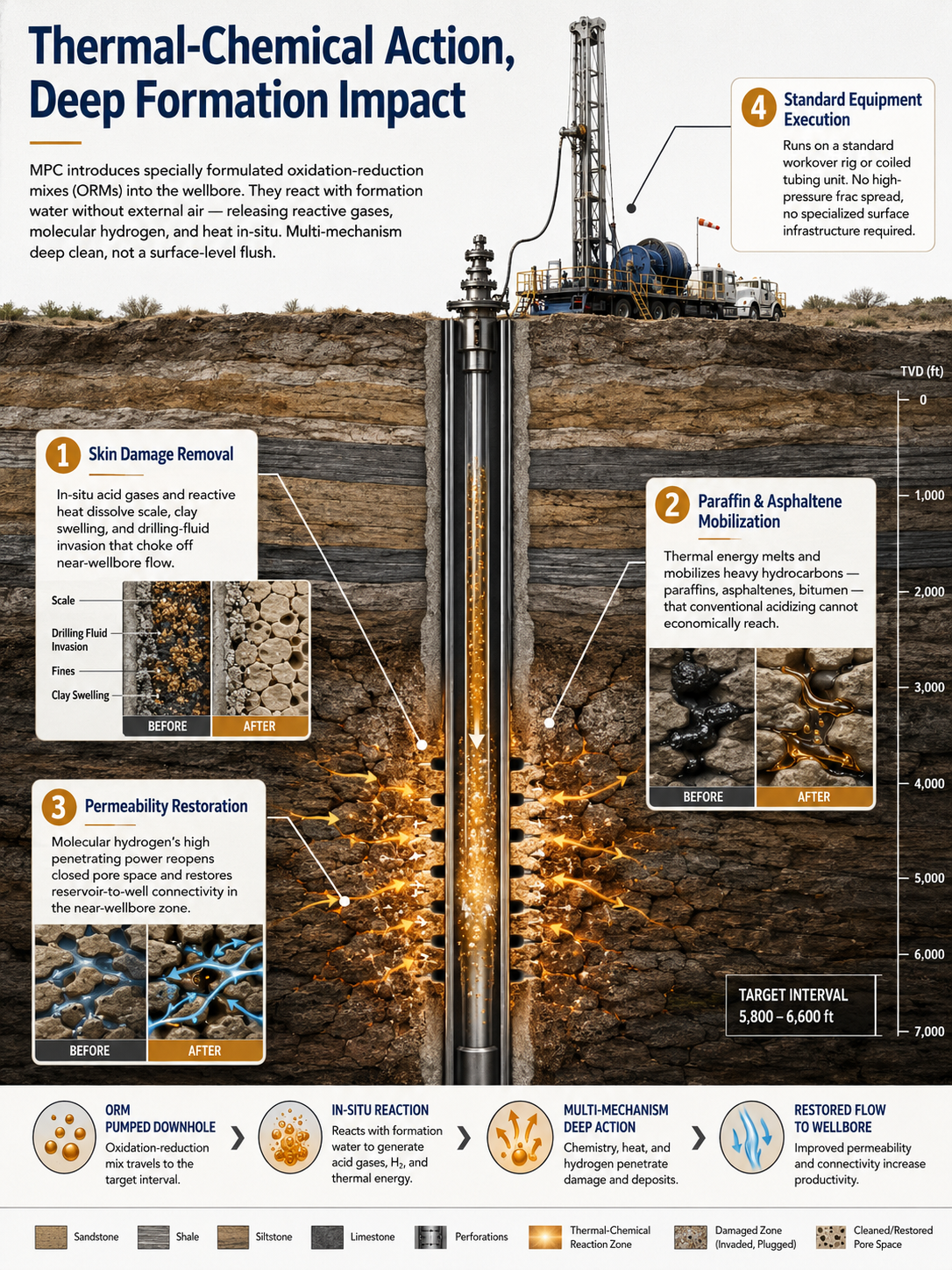
MPC introduces specially formulated oxidation-reduction mixes (ORMs) into the wellbore. They react with formation water without external air — releasing reactive gases, molecular hydrogen, and heat in-situ. Multi-mechanism deep clean, not a surface-level flush.
1
Skin Damage Removal
In-situ acid gases and reactive heat dissolve scale, clay swelling, and drilling-fluid invasion that choke off near-wellbore flow.
2
Paraffin & Asphaltene Mobilization
Thermal energy melts and mobilizes heavy hydrocarbons — paraffins, asphaltenes, bitumen — that conventional acidizing cannot economically reach.
3
Permeability Recovery
Molecular hydrogen's high penetrating power reopens closed pore space and recovers reservoir-to-well connectivity in the near-wellbore zone.
4
Standard Equipment Execution
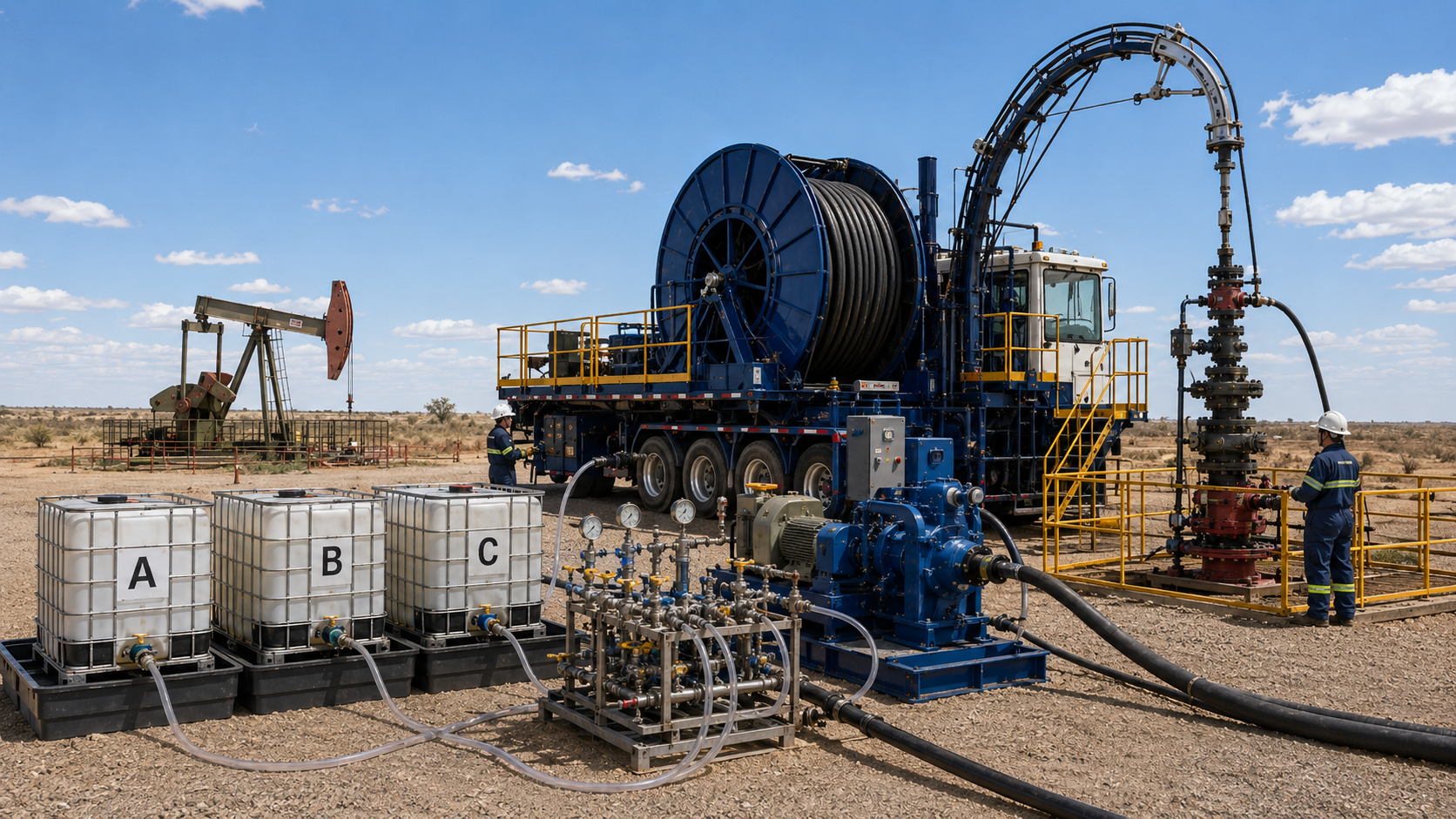
Runs on a standard workover rig or coiled tubing unit. No high-pressure frac spread, no specialized surface infrastructure required.
MPC In Action
See The MPC Method
Well Screening Criteria
Is Your Well a Candidate?
MPC is not for every well. It performs best where production has declined materially but recoverable potential remains — and where a specific near-wellbore mechanism explains the gap.
Material Production Decline
Historical peak was significantly higher than current rate. Something changed — it didn't just deplete uniformly.
Near-Wellbore Damage Suspected
High skin factor, mud invasion history, scale or clay swelling indicated by diagnostic data or production behavior.
Paraffin or Asphaltene Issues
High-pour-point crude, waxy oil, asphaltene deposition history, or hot-oil treatments that need frequent repetition.
Short-Lived Prior Stimulation
Acidizing or workover provided temporary improvement, then production fell back — suggesting incomplete treatment of near-wellbore damage.
Adequate Reservoir Drive Remains
Pressure data, neighboring performance, or volumetric estimates support remaining potential. Not a fully depleted well.
Where Fracking Can't Help
Casing-integrity concerns, depleted low-gradient zones, environmentally sensitive areas, or heavy oil where mechanical pressure delivers limited benefit.
Technology Comparison
MPC vs. Conventional Stimulation
MPC is complementary to — not a universal replacement for — hydraulic fracturing and conventional acidizing. It owns a specific niche those methods cannot address economically.
| Parameter | MPC Method | Hydraulic Fracturing | Matrix Acidizing | Gas / CO₂ Injection |
|---|---|---|---|---|
| Mechanism | Thermal, gas, pressure effects | Mechanical pressure fracturing | Acid dissolution of damage | Miscible or immiscible gas displacement |
| Equipment | Standard workover or coiled tubing | Specialized high-pressure frac spread | Pump trucks, acid handling | Injection wells, compressors, pipelines |
| Treatment Duration | 2–3 days | 1–5 days, multi-stage | 1–3 days | Months to years |
| Casing Risk | Low; controlled reaction | High; pressure-induced | Moderate; acid corrosion | Moderate; corrosion and pressure |
| Paraffin / Heavy Oil | Strong thermal mobilization | Limited | Partial | Reservoir-dependent viscosity reduction |
| Surface Footprint | Low; eco-friendly ORMs* | High; water, chemicals, proppants | Moderate | High infrastructure requirement |
| Effect Duration | 8–20 months reported | Long-lasting structural | 6–12 months typical | While injection remains active |
* Environmental characterization based on internal expert conclusions. Results vary by well condition, reservoir type, and execution quality. This table reflects reported data and general industry ranges — not a guarantee of performance.
International Field Results
500 Projects. 20 Years.
500 Projects. 20 Years.
10+ Countries.
MPC track record spans 10+ countries, including Kuwait, India, Kazakhstan, Pakistan, and Ukraine. Tap any country to view its case.
Latest News

MPC Well Stimulation Presented to North American Operators at Global Energy Show Calgary
Read more →
MPC Technology Reaches Global Stage at ADIPEC 2024
Read more →
How We Work Together
From First Call to Field Roll-Out
We don't ask for commitment before we've earned it. The process starts with a candid technical discussion — and only moves forward if the data supports it.
01
Introduction & Fit
Short call. We learn your field, candidate wells, and production history. No commitment required.
02
NDA & Well Screening
We sign an NDA. You share existing well data. The technical team performs screening evaluation.
03
Pilot Design
Scope, baseline period, evaluation checkpoints, and commercial terms agreed well-by-well.
04
Treatment & Results
MPC treatment executed with local workover/CT crew. Post-treatment production documented.
05
Field Roll-Out
Commercial program across the asset, informed by pilot results. Expansion only where data supports it.
U.S. Target Basins
Where MPC May Fit
Where MPC May Fit
Across the U.S.
Initial U.S. screening focuses on mature and underperforming assets where production has declined, recoverable potential remains, and near-wellbore or formation impairment may be limiting flow. Permian-first, with expansion into other technically relevant U.S. basins.
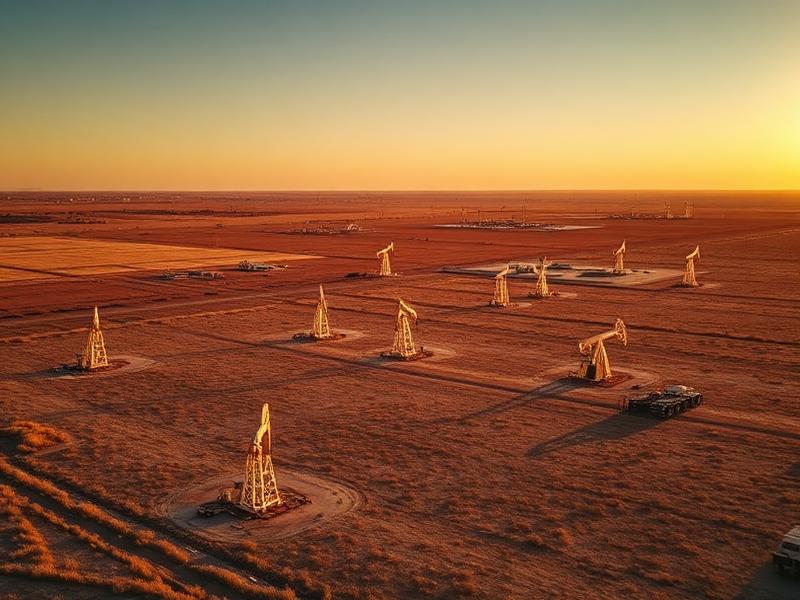
Permian — Midland Basin
West Texas
Mature verticals, high skin, scale, paraffin, and declining legacy production.
Review Candidate Profile →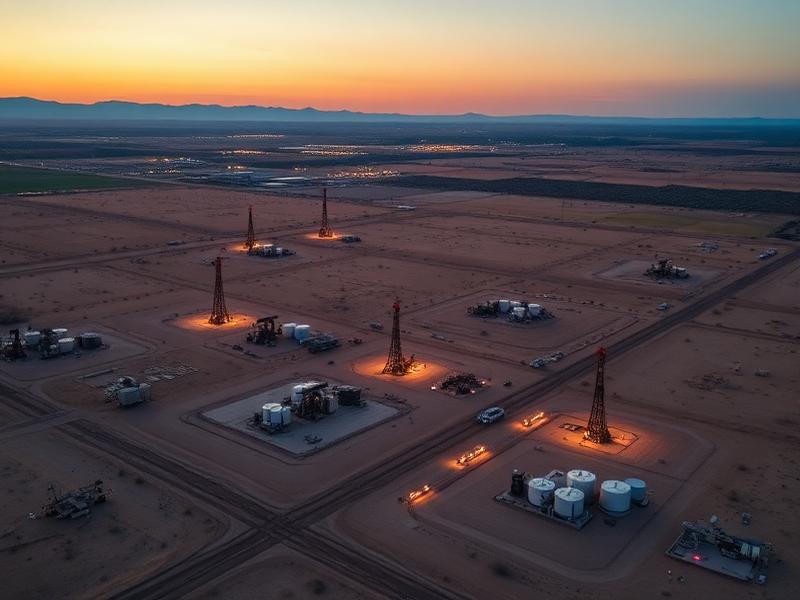
Permian — Delaware Basin
West Texas / Southeast New Mexico
Damaged completions, restricted inflow, declining wells, and intervention candidates.
Review Candidate Profile →
Eagle Ford
South Texas
High-decline wells, near-wellbore impairment, condensate, and organic deposition.
Review Candidate Profile →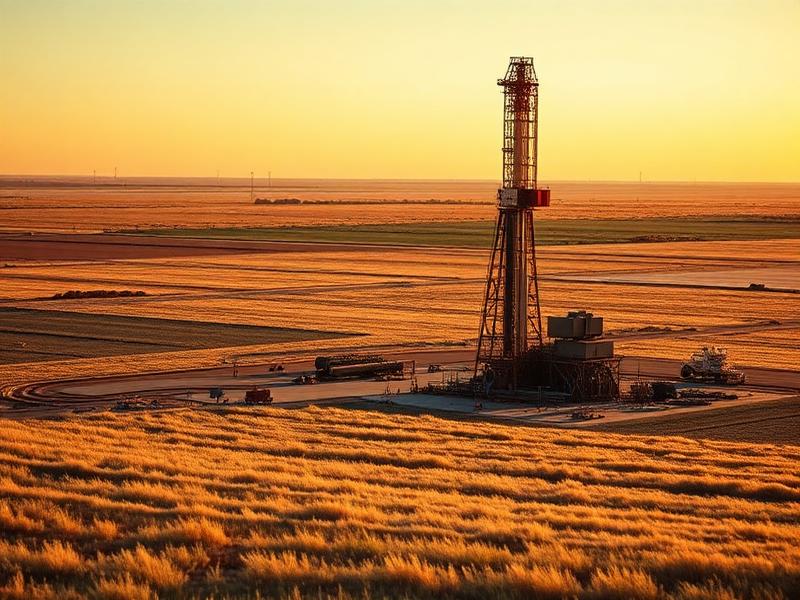
SCOOP / STACK
Oklahoma
Declining producers, completion damage, low permeability, and weak prior response.
Review Candidate Profile →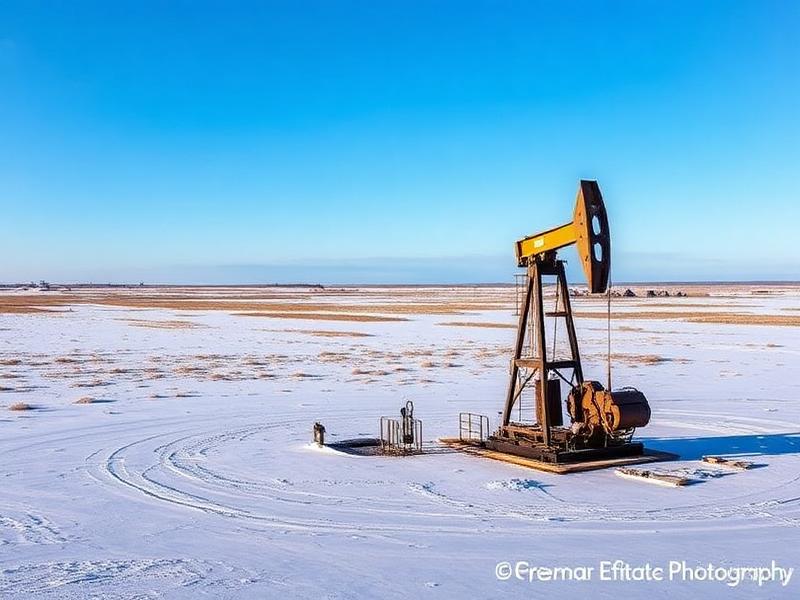
Bakken
North Dakota / Montana
Paraffin-prone wells, restricted near-wellbore flow, and declining production.
Review Candidate Profile →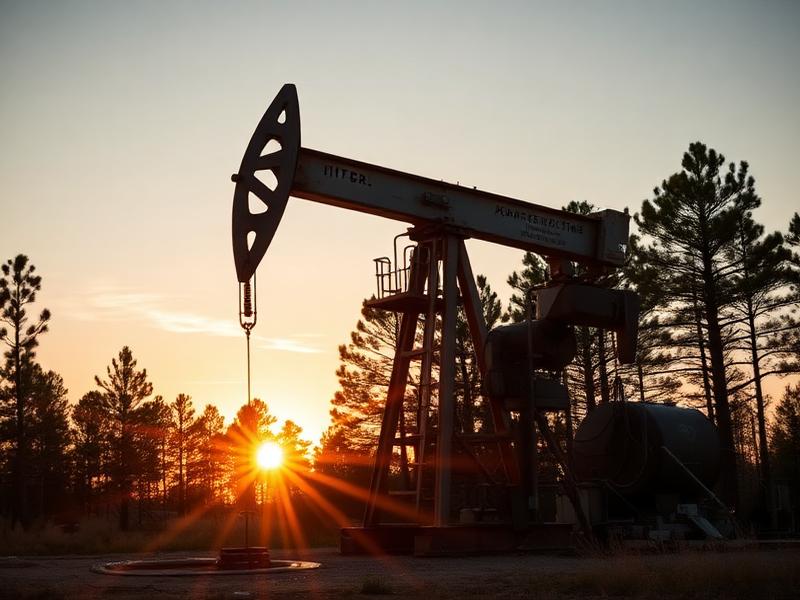
Mature Texas Conventional
Central, East, and West Texas
Legacy wells with material production loss and credible remaining reserves.
Review Candidate Profile →
Alaska
North Slope / Cook Inlet
Cold-flow, paraffin, mature-well, and complex intervention candidates.
Review Candidate Profile →
Heavy-Oil and Conventional Assets
California, Texas, Alaska, and other mature plays
High-viscosity oil, impaired mobility, and underperforming existing wells.
Review Candidate Profile →Basin inclusion indicates potential technical relevance and does not represent prior U.S. MPC deployment. Candidate fit is determined well by well.
Tax & Regulatory Incentive
Texas Severance Tax Tailwind
MPC can be structured to qualify for Texas' reduced severance tax rate for certified EOR projects, improving project economics.
Texas EOR Severance Tax Rate
Oil from an RRC-certified EOR project qualifies for a 2.3% severance tax rate — half the standard 4.6%.
- Applies for 10 years after certification
- Form H-12 / H-13 under Statewide Rule 50
- Qualification is not assumed; requires operator, counsel, and RRC review
Incentive qualification is subject to eligibility, regulatory approval, and professional tax and legal counsel. All-In Energy does not provide tax advice.
Contact
U.S. Commercialization
U.S. Commercialization
— All-In Energy Pro
Ready to Screen Your Wells?
All-In Energy Pro helps U.S. operators evaluate and deploy MPC well-stimulation technology, from candidate-well screening and pilot structuring through local field coordination and results review.
The service is delivered with dedicated MPC technology, treatment engineering, and technical supervision.
Tier 1 screening data needed: Well ID, field/formation, perforated intervals, current & 12-month production history, historical peak rate, reservoir temperature/pressure, oil gravity/viscosity, prior workover and stimulation history, and your diagnosis of the production problem.
Request a Well Screening
No commitment required. We'll review your data and confirm technical fit — typically within 24 hours.
Request Received
Thank you. Our team will review your information and follow up within 24 hours. Immediate questions: +1 (786) 407-0310.